Fasting
29 minute read
This article is intended for informational purposes only and should not be considered medical advice. Always consult with a healthcare professional before making any significant changes to your diet or exercise routine.
Fasting is one of the most powerful tools you have for healing, metabolic health, and body composition. It has been practiced for thousands of years across cultures and religions. Modern science is now catching up to what ancient wisdom already knew: strategic periods without food trigger profound healing mechanisms in the body.
This is not about starvation. This is about intentional, controlled periods of not eating that allow your body to shift from constantly digesting food to repairing, healing, and optimizing itself.
What Is Fasting?
Fasting is the intentional abstention from food for a specific period. This is distinct from starvation, which is involuntary and uncontrolled deprivation of food.
Fasting is intentional. You choose when to start, when to stop, and how to refeed. You are in control.
Starvation is desperate. It is forced by circumstances beyond your control and lacks strategy or safety protocols.
The human body is optimized for feast and famine. For most of human history, food was not constantly available. We evolved to thrive in cycles of abundance and scarcity. In the 21st century, we have mastered the feast part. Food is everywhere, all the time. But we have lost the famine part, and that is causing metabolic disaster: obesity, diabetes, insulin resistance, chronic inflammation, and metabolic syndrome.
Fasting brings back the famine cycle in a controlled, beneficial way.
When you fast, your mouth stops eating, but your body keeps eating. It just switches fuel sources from external food to internal stored energy (body fat). Done correctly, fasting is not deprivation. It is metabolic flexibility.
Fasting Is NOT an Eating Disorder
This needs to be crystal clear: fasting and eating disorders are fundamentally different.
Fasting:
- Intentional and controlled
- Time-limited with clear start and end
- Includes strategic refeeding with nutrient-dense food
- Monitored with attention to how you feel
- Uses supplements (electrolytes, vitamins) to support the body
- Pursued for health, performance, or spiritual reasons
- You feel empowered and in control
Eating disorder:
- Driven by fear, anxiety, or obsession
- No clear plan or end point
- Refeeding is chaotic, guilt-ridden, or avoided
- Ignores warning signs and pushes through danger
- Isolation and secrecy around eating habits
- Pursued to punish yourself or achieve unrealistic body standards
- You feel out of control and ashamed
If you have a history of eating disorders (anorexia, bulimia, binge eating disorder), do not fast without professional guidance. Fasting can be a powerful tool, but it can also be misused as a cover for disordered eating.
If you are using fasting to punish yourself, to avoid food out of fear, or because you feel out of control around eating, stop and seek help. Talk to a trusted mentor, counselor, or healthcare provider.
Healthy fasting is strategic, empowering, and sustainable. Disordered eating is destructive, shame-driven, and compulsive.
Why Fast?
Fasting triggers powerful biological mechanisms that do not happen when you are constantly eating.
Autophagy
Autophagy means “self-eating.” It is the process where your cells break down and recycle damaged components, misfolded proteins, and cellular debris. Think of it as taking out the trash at the cellular level.
Autophagy ramps up significantly after 16-24 hours of fasting and continues to increase the longer you fast. This process:
- Clears out damaged mitochondria (the energy factories of cells)
- Removes toxic protein buildup linked to neurodegenerative diseases
- Recycles amino acids for use in building new proteins
- Reduces inflammation throughout the body
Autophagy is why fasting is linked to longevity, cancer prevention, and neurological health. For an in-depth explanation of autophagy and fasting, see Dr. Jason Fung’s work in the Resources section below.
Gut Healing
Your digestive system is constantly working when you eat multiple times per day. Fasting gives your gut a break.
During a fast:
- The migrating motor complex (MMC) activates, sweeping undigested food and bacteria through the intestines
- Inflammation in the gut lining decreases
- The gut microbiome rebalances (beneficial bacteria thrive, harmful bacteria decrease)
- Intestinal permeability (leaky gut) improves
If you have digestive issues, bloating, IBS, or food sensitivities, fasting can provide significant relief and healing.
Hormonal Reset
Fasting dramatically affects your hormones:
- Insulin drops - Giving your body a break from constantly managing blood sugar. This improves insulin sensitivity and helps reverse insulin resistance.
- Human Growth Hormone (HGH) spikes - Research shows HGH can increase by 300-500% during a 24-48 hour fast. This promotes fat burning, muscle preservation, and cellular repair.
- Norepinephrine increases - Boosts energy, focus, and fat mobilization.
- Ghrelin and leptin rebalance - Over time, fasting helps regulate hunger hormones so you feel hungry when you actually need food, not constantly.
Mental Clarity and Focus
Many people report enhanced mental clarity, focus, and cognitive performance while fasting. This happens because:
- Ketones (produced from burning fat) are a highly efficient fuel for the brain
- Blood sugar stabilizes (no crashes from carb-heavy meals)
- Inflammation decreases, improving brain function
- BDNF (brain-derived neurotrophic factor) increases, supporting neuron growth and protection
Fasting eliminates the post-meal brain fog and gives you sustained, stable energy.
Weight Loss and Body Composition
Fasting is highly effective for weight loss because:
- You create a caloric deficit without counting calories
- Insulin drops, allowing your body to access stored fat for energy
- HGH preserves lean muscle while burning fat
- You shift from a sugar-burning metabolism to a fat-burning metabolism
When your mouth is not eating, your body happily gorges on your stored body fat (if done correctly with proper electrolytes and nutrients).
Immune System Boost
Research shows that fasting:
- Reduces chronic inflammation (which underlies most chronic diseases)
- Triggers the regeneration of immune cells
- Increases resistance to oxidative stress
- May help reduce symptoms of autoimmune conditions
Fasting gives your immune system space to reset and repair rather than constantly managing incoming food.
Spiritual Benefits
Fasting has deep spiritual roots. It is practiced across religions (Christianity, Islam, Judaism, Buddhism, Hinduism) as a discipline that:
- Increases focus on prayer and meditation
- Builds self-control and discipline
- Creates humility and dependence on God
- Sharpens spiritual awareness
Fasting is not just physical. It is a holistic practice affecting body, mind, and spirit.
Fasting Protocols
Different fasting protocols serve different goals. Start with easier protocols and progress as you build experience and metabolic flexibility.
Intermittent Fasting (IF)
Intermittent fasting involves daily eating windows. These are sustainable long-term and provide daily healing benefits.
16/8
What it is: Fast for 16 hours, eat during an 8-hour window.
Example schedule:
- Stop eating at 8 PM
- Skip breakfast
- First meal at 12 PM (noon)
- Eat between 12 PM and 8 PM
Benefits:
- Easy to maintain daily
- Improves insulin sensitivity
- Promotes fat burning
- Minimal disruption to social life
Best for: Beginners, daily sustainable practice, improving metabolic health.
18/6
What it is: Fast for 18 hours, eat during a 6-hour window.
Example schedule:
- Stop eating at 7 PM
- First meal at 1 PM
- Eat between 1 PM and 7 PM
Benefits:
- Deeper into autophagy than 16/8
- Greater fat burning
- More pronounced mental clarity
- Still socially manageable
Best for: Daily sustainable practice with enhanced benefits, fat loss, metabolic flexibility.
20/4
What it is: Fast for 20 hours, eat during a 4-hour window.
Example schedule:
- Stop eating at 8 PM
- First meal at 4 PM
- Eat between 4 PM and 8 PM
Benefits:
- Significant autophagy daily
- Strong fat-burning state
- High mental clarity
- Forces nutrient-dense eating (less time to eat junk)
Best for: Experienced fasters, aggressive fat loss, busy schedules where fewer meals simplify life.
OMAD
What it is: Eat one large, nutrient-dense meal per day, fasting for approximately 23 hours.
Example schedule:
- Eat dinner at 6 PM
- Fast until 6 PM the next day
Benefits:
- Simplifies life (no meal prep, no thinking about food all day)
- Deep daily autophagy
- Significant fat loss
- Forces intentional, nutrient-rich meals
Limitations:
- Does not provide enough time in deep healing mode for serious health issues
- Can be difficult to consume enough calories and nutrients in one meal
- Socially limiting (most social activities involve food)
Best for: Experienced fasters, maintenance phase, simplifying daily routine.
For most people seeking sustainable daily practice, 18/6 or OMAD is the recommendation. These provide daily healing and metabolic benefits without being extreme.
Rolling 48s
What it is: Fast for 48 hours, refeed with a nutrient-dense meal, then fast for another 48 hours. Repeat for 2-3 weeks.
Example schedule:
- Eat dinner Sunday at 6 PM
- Fast Monday and Tuesday (48 hours)
- Eat dinner Tuesday at 6 PM (nutrient-dense refeed)
- Fast Wednesday and Thursday (48 hours)
- Eat dinner Thursday at 6 PM (nutrient-dense refeed)
- Continue pattern for 2-3 weeks, then transition to feast mode
Why this is the sweet spot:
Rolling 48s hit the perfect balance between effectiveness and sustainability.
Benefits:
- Deep autophagy - You are in autophagy for the majority of the week
- Significant HGH production - Peaks around 24-48 hours
- Gut healing time - Two full days gives the gut real recovery
- Body burns stored fat - Your body happily uses stored energy
- Sustainable for 2-3 weeks - Unlike longer fasts, you refeed every 48 hours with nutrients
- Nutrient-dense refeeds replenish one-time consumables - Amino acids (lysine, leucine), vitamins (C, B-complex), minerals (zinc, copper, magnesium) that your body cannot recycle
Why Not OMAD?
OMAD gives you ~20-23 hours fasted, which is good but does not get you into deep healing mode.
Why Not 3+ Day Fasts?
After 48-72 hours, you start running low on micronutrients the body cannot recycle: lysine, leucine, alpha-lipoic acid (ALA), vitamin C, B-vitamins, zinc, copper. This makes longer fasts harder to sustain and requires more careful supplementation.
Why Not 7+ Day Fasts?
See the section below on why we strongly discourage fasts over 7 days.
If you are looking to make major progress - significant healing, losing 50+ pounds, resetting metabolic health - Rolling 48s are the most effective protocol. You get maximum autophagy hours, deep healing, and sustainable execution over weeks.
How to refeed on Rolling 48s:
Your refeed meal every 48 hours should be nutrient-dense to replenish what your body used:
- High-quality protein (grass-fed beef, wild-caught fish, pasture-raised eggs)
- Healthy fats (avocado, olive oil, butter, nuts)
- Nutrient-rich vegetables (leafy greens, cruciferous vegetables)
- Bone broth (collagen, amino acids, minerals)
- Avoid processed carbs, sugar, and junk food
This signals to your body: “Not only do we have food, we have high-quality food to top off all major systems.”
Periodic Extended Fasts
If you are practicing daily intermittent fasting (18/6 or OMAD) and not doing Rolling 48s, consider an occasional 2-3 day fast every month, every other month, or once per quarter.
Why:
- Provides a powerful hormetic stress that resets systems
- Deeper autophagy than daily IF
- Gut healing and immune reset
- Mental clarity and discipline boost
How often:
- Once per month: Strong metabolic reset
- Every other month: Balanced approach
- Once per quarter: Maintenance
This gives you the benefits of extended fasting without committing to Rolling 48s for weeks.
Fasts Over 7 Days
Extended fasts beyond 7 days sound impressive, but the risk-reward ratio does not make sense.
We strongly discourage water fasts longer than 7 days for several reasons:
1. Diminishing returns on autophagy When you map out total hours spent in autophagy, a miserable 14-day water fast provides only a negligible increase in autophagy hours compared to Rolling 48s over the same timeframe. You suffer more but do not get significantly better results.
2. Micronutrient depletion becomes complex After 7 days, your body starts running critically low on vitamins and minerals it cannot synthesize: vitamin C, B-vitamins, zinc, copper, selenium, and essential amino acids. Managing this becomes complicated and risky.
3. Refeeding syndrome becomes a real danger Refeeding syndrome (dangerous electrolyte shifts when reintroducing food) is rare in short fasts but becomes a serious risk after 7+ days, especially if not managed carefully. Learn more about refeeding syndrome.
4. Harder, more dangerous, NOT more effective Long fasts are harder to execute, carry more risk, and do not provide proportionally better results than shorter, strategic fasts like Rolling 48s.
If your goal is serious healing or weight loss, Rolling 48s for 2-3 weeks are far more effective and sustainable than a single long fast.
Setting Yourself Up for Success
Do not just dive into fasting cold turkey if you are currently a sugar-burner. Set yourself up for success.
Transition Gradually
If you currently eat a standard American diet (lots of carbs, sugar, frequent meals), jumping straight into a 48-hour fast will be miserable. You will likely experience:
- Severe headaches
- Keto flu (fatigue, irritability, brain fog)
- Extreme hunger and cravings
- Electrolyte crashes (carbs hold water, so when you stop eating them, you lose water rapidly through urination and bowel movements)
It does not have to be this way.
Recommended transition:
- Cut out processed sugar and refined carbs - Eliminate soda, candy, white bread, pasta. Eat whole foods.
- Shift to a low-carb or ketogenic diet for 3-7 days - Train your body to burn fat instead of sugar.
- Try OMAD for a day or two - Get comfortable with longer fasting windows.
- Then slide into your first 48-hour fast - Your body is already fat-adapted, so the transition is smooth.
Why this works:
- You avoid keto flu because your body is already producing ketones
- Hunger is manageable because your insulin is stable
- Electrolyte shifts are less dramatic because you are not shedding massive amounts of water
- You feel energized instead of miserable
Fasting should feel empowering, not torturous. If you are struggling, it is usually because you did not prepare your metabolism. Slow down, transition gradually, and set yourself up for success.
Electrolytes
The number one reason people feel terrible during extended fasts is electrolyte imbalance, not lack of food.
Sodium-Potassium Pump
Your cells use a sodium-potassium pump to maintain electrical balance and proper function. This pump requires balanced levels of both sodium and potassium.
What happens during a fast:
- When you fast, insulin drops.
- Low insulin signals your kidneys to release sodium (you urinate more).
- As sodium levels drop, your body gets rid of potassium to maintain the sodium-to-potassium ratio.
- After 2+ days of fasting, you are running low on both sodium and potassium.
- Result: Your entire body operates in a degraded state. You feel weak, dizzy, fatigued, irritable, and get headaches.
The fix is simple: Replenish sodium and potassium with electrolytes.
During a fast, you lose sodium through increased urination (triggered by low insulin). Your body then dumps potassium to maintain the proper sodium-potassium ratio. By day 2-3, you are low on both, and you feel terrible.
Restoring electrolytes drastically changes how you feel. Most people think they cannot fast. The truth is they just need electrolytes.
Recommended Electrolyte Products
1. Keto Vitals Electrolyte Powder (No Sugar)
This is our top recommendation. It contains:
- Sodium
- Potassium
- Magnesium
- Calcium
- No sugar, no artificial sweeteners
Dosage during extended fasts:
- 1 dose per day for 24-48 hour fasts
- 2 doses per day for fasts beyond 48 hours or if you feel off
2. RealSalt
High-quality, unrefined sea salt with trace minerals. Use this in addition to electrolyte powder.
- Add a pinch to water throughout the day
- Put under your tongue if you feel lightheaded
How to Mix and Drink
Here’s the practical approach for mixing your electrolyte drink:
Mixing:
- Fill a tall glass (20oz or more) with water
- Add one scoop of Keto Vitals electrolyte powder
- Add 1/4 teaspoon of RealSalt
- This gives you the recommended 2:1 potassium-to-sodium ratio
Stir constantly - The minerals are suspended in the water and sink to the bottom quickly. Stir it up right before each sip.
This is critical: do not down the entire glass in one go. You would be suddenly dumping 1 gram of potassium into your potassium-deprived body, which can make you feel lightheaded, nauseous, or worse.
Proper drinking method:
- Drink about 1/3 of the glass
- Wait 10 minutes
- Drink another 1/3
- Wait 10 minutes
- Finish the rest
Remember to stir before each drink since the minerals settle at the bottom.
Can You Overdo Electrolytes?
Within reason, there’s nothing too dangerous about having a second electrolyte drink if you feel you need it. The goal is to “top off” the potassium inside your cells and maintain the right ratio of sodium outside your cells. If your body is already fully replenished and you drink more, you simply pass the excess potassium and sodium in your urine. Your body is good at self-regulating when you’re not severely depleted.
When to Take Electrolytes
- Start on day 1 of any fast over 24 hours
- If you feel headache, dizziness, fatigue, or weakness, take electrolytes immediately
- For fasts over 48 hours, take 1-2 doses daily proactively
Most people who say “I tried fasting and felt terrible” did not use electrolytes. Electrolytes are not optional for extended fasts. They are essential.
Other Supplements During Fasting
Multivitamin:
- Take a quality multivitamin during extended fasts (48+ hours) to cover micronutrients your body cannot recycle.
Bone broth:
- Technically breaks a pure water fast, but for extended fasts (48+ hours), bone broth provides collagen, amino acids, and minerals that support the body.
- If you feel weak or shaky, a cup of bone broth can keep you going without significantly disrupting the fasting benefits.
What Your Body Recycles
Your body is remarkably efficient at recycling some nutrients during a fast, but others are one-time use and get depleted.
What your body recycles (through autophagy):
- Proteins and amino acids from damaged cells
- Fatty acids from stored body fat
- Ketones for energy
- Some minerals from bone and tissue
What your body cannot recycle (runs out during extended fasts):
- Essential amino acids: Lysine, leucine, isoleucine, valine, methionine, threonine, phenylalanine, tryptopane, histidine
- Vitamins: Vitamin C, B-vitamins (B1, B2, B3, B6, B12), vitamin A, vitamin E
- Minerals: Zinc, copper, selenium, iodine
- Electrolytes: Sodium, potassium, magnesium (these deplete fastest)
This is why nutrient-dense refeeds are critical for extended fasts, and why Rolling 48s work so well (you replenish every 48 hours before running out).
Cycling Fasting and Feasting
Your body is not a machine with on/off switches. It is a dynamic, adaptive system that responds hormonally to patterns over time.
Hormetic Stress vs Chronic Stress
A single extended fast (48 hours, 72 hours, even 5 days) is a hormetic stress - a beneficial stressor that triggers repair, adaptation, and growth. This concept of hormetic stress (beneficial low-dose stressors) is well-established in biology and applies to fasting, exercise, cold exposure, and other challenges.
Back-to-back extended fasts without adequate feasting periods become chronic stress - a harmful stressor that triggers survival mechanisms.
What happens if you do too many extended fasts without feast periods:
- Metabolic adaptation - Your body perceives scarcity and down-regulates metabolism to conserve energy. This is a well-documented survival mechanism.
- Cortisol spikes - Chronic fasting triggers the stress hormone cortisol, which promotes fat storage (especially abdominal fat).
- Thyroid down-regulation - T3 (active thyroid hormone) decreases, slowing metabolism.
- Leptin drops - Leptin signals energy availability. When it drops too low, your body thinks you are starving and resists fat loss.
- Fat preservation mode - Your body becomes extremely efficient at holding onto fat, thinking: “We are in a crisis. Store everything we can.”
Example scenario:
You do a 4-day fast. Great! Nutrient-dense refeed. You feel amazing. Two days of normal eating, then another 4-day fast. Still good. Another 2 days of eating, then a third 4-day fast.
Now your body starts thinking: “Wait. Are we actually in real trouble? We seem to have very limited access to food. This is freaking me out! I am going to down-regulate metabolism and go into fat-preserving mode until this crisis is over!”
The more you push, the more your body resists.
Strategic Feast Periods
To avoid metabolic adaptation, you need feast periods between extended fasting cycles.
After 2-3 weeks of Rolling 48s:
- Transition to normal eating for 1-2 weeks
- Do not binge, but eat regular meals throughout the day
- Focus on nutrient-dense, whole foods
- This signals to your body: “We have abundant access to food. It is safe. We are not in a survival crisis.”
After a 3-5 day fast:
- Take at least 1 week of normal eating before attempting another extended fast
The goal: Cycle between feast and famine so your body experiences the hormetic benefits of fasting without triggering chronic stress responses.
You cannot fast forever. Your body adapts to patterns. Strategic feast periods are essential for long-term success. Think of fasting as a tool you use periodically, not a permanent state.
Refeeding
How you break a fast is almost as important as the fast itself.
Breaking Short Fasts (16-24 hours)
For daily intermittent fasting (16/8, 18/6, 20/4, OMAD), you do not need special protocols. Break your fast with a normal, whole-food meal.
Good options include eggs and vegetables, grilled chicken with salad, or salmon with roasted vegetables. Avoid processed junk, but no need to overthink it.
Breaking Extended Fasts (48+ hours)
For fasts over 48 hours, your digestive system has been resting. Reintroduce food gently and strategically.
Why Gentle Refeeding Matters
This is not just cautious advice. This is practical guidance to prevent a traumatic bathroom experience.
When you fast for 36+ hours, your GI tract goes into dormant mode. One of the most critical changes is bile production. Bile salts are required to break down fats, and after an extended fast, your body has essentially none on hand.
What happens if you break a fast with a heavy, fatty meal? You eat fried chicken, avocados cooked in butter, or a greasy burger. That food hits your stomach, but there are not enough bile salts to break down the fat. Your body panics: “We need to get this out of here!” The result? Explosive diarrhea.
If you have been fasting for 36+ hours and decide to break your fast at a restaurant, you are taking a serious risk. Depending on what you order and how fast you eat it, you may need to make a sudden, urgent exit to the bathroom. This is not hypothetical. This is a real, common mistake people make.
The solution is simple: start with gentle foods that “prime” your GI tract. A cup of bone broth with a tiny dab of butter, a few soft-fried eggs cooked in a little butter - these give your digestive system a gentle signal: “We are back in action. Time to ramp up bile production to 100%.”
This allows your body to restart digestion gradually instead of being overwhelmed and forcing everything out the emergency exit.
Breaking an extended fast (36+ hours) at a restaurant is risky. You do not control portion sizes, fat content, or how quickly food arrives. If you eat too much, too fast, or something too rich, you may experience urgent gastrointestinal distress. Break your fast at home first, then go out to eat a few hours later if you want.
Your first meal should be nutrient-dense and easy to digest:
- Bone broth - Warms up the digestive system, provides collagen and amino acids, signals gentle restart
- Soft-cooked eggs - Cooked in a small amount of butter, easy protein
- Cooked vegetables - Steamed or roasted, easy to digest
- Small portions of high-quality protein - Grass-fed beef, wild-caught fish, pasture-raised eggs (but start small)
Avoid on the first refeed:
- Large meals - Start small, eat more a few hours later if still hungry. Your stomach has shrunk and your digestive system is not ready for volume.
- Heavy, fatty, greasy foods - Fried foods, fatty meats, large amounts of oil or butter will overwhelm your bile production and can cause explosive diarrhea.
- Processed carbs and sugar - Can spike insulin dramatically after your body has been in a low-insulin state.
- Raw vegetables or tough-to-digest foods - Your digestive system needs gentle, cooked foods first.
Refeeding syndrome is a dangerous shift in electrolytes (especially phosphorus, potassium, magnesium) that can occur when reintroducing food after prolonged fasting. It is rare in fasts under 5 days but becomes a risk after 7+ days. Learn more about refeeding syndrome.
How to avoid it:
- Break extended fasts gently with small, nutrient-dense meals
- Continue electrolyte supplementation for the first day after breaking the fast
- Monitor how you feel (dizziness, weakness, irregular heartbeat are warning signs)
Who Should NOT Fast
Fasting is powerful, but it is not for everyone.
Do not fast if:
- You are under 18 and still growing - Your body needs consistent nutrients for development.
- You have a history of eating disorders - Fasting can be a trigger or cover for disordered eating. Work with a professional.
- You are pregnant or breastfeeding - Your body has increased nutrient demands.
- You are significantly underweight - Fasting is for metabolic health and fat loss, not for losing weight when you are already too thin.
- You have type 1 diabetes - Fasting dramatically affects blood sugar and insulin. Do not fast without medical supervision.
- You are on medications that require food - Some medications must be taken with food. Check with your doctor.
- You have a history of severe hypoglycemia - Fasting may trigger dangerous blood sugar drops.
Proceed with caution if:
- You have type 2 diabetes and take insulin or blood sugar medications - Fasting can improve insulin sensitivity dramatically, but medication dosages may need adjustment. Work with your doctor.
- You have kidney disease - Electrolyte balance is critical. Medical supervision is advised.
- You are on blood pressure medication - Fasting can lower blood pressure. Monitor closely and adjust medication with your doctor.
Body Fat Percentage Matters
Most of this guide assumes you have body fat to lose. A majority of the U.S. population is obese, so there is a standing assumption that you may have tens or even hundreds of thousands of calories stored as body fat.
If you should weigh 185 pounds but currently weigh 260 pounds, you are carrying 75 extra pounds of body fat. Since a pound of fat stores approximately 3,500 calories, that means:
75 lbs × 3,500 calories = 262,500 calories
You are literally walking around with over 260,000 calories on your body. That is not “skipping meals.” That is tapping into a massive energy reserve your body has been storing for exactly this purpose. When we say that fasting is really just your mouth not eating, but your body continues to chow-down on stored fat, this is what we mean. Your body has a huge energy reserve to burn during a fast, and it can do so happily without you feeling deprived.
In this case, if you are overweight, fasting is the “easy” path because your body can happily feast on your stored fat for fuel.
However, as you get into shape, build muscle, and lean out, fasting becomes more complex. If you are a male at 10% body fat, 8%, or lower, you do not have much fat for your body to “happily munch” on during a fast. At very low body fat percentages, your body starts breaking down muscle and organs for fuel. That is not fasting. That is starving. To levelset, here’s what different body fat percentages look like:
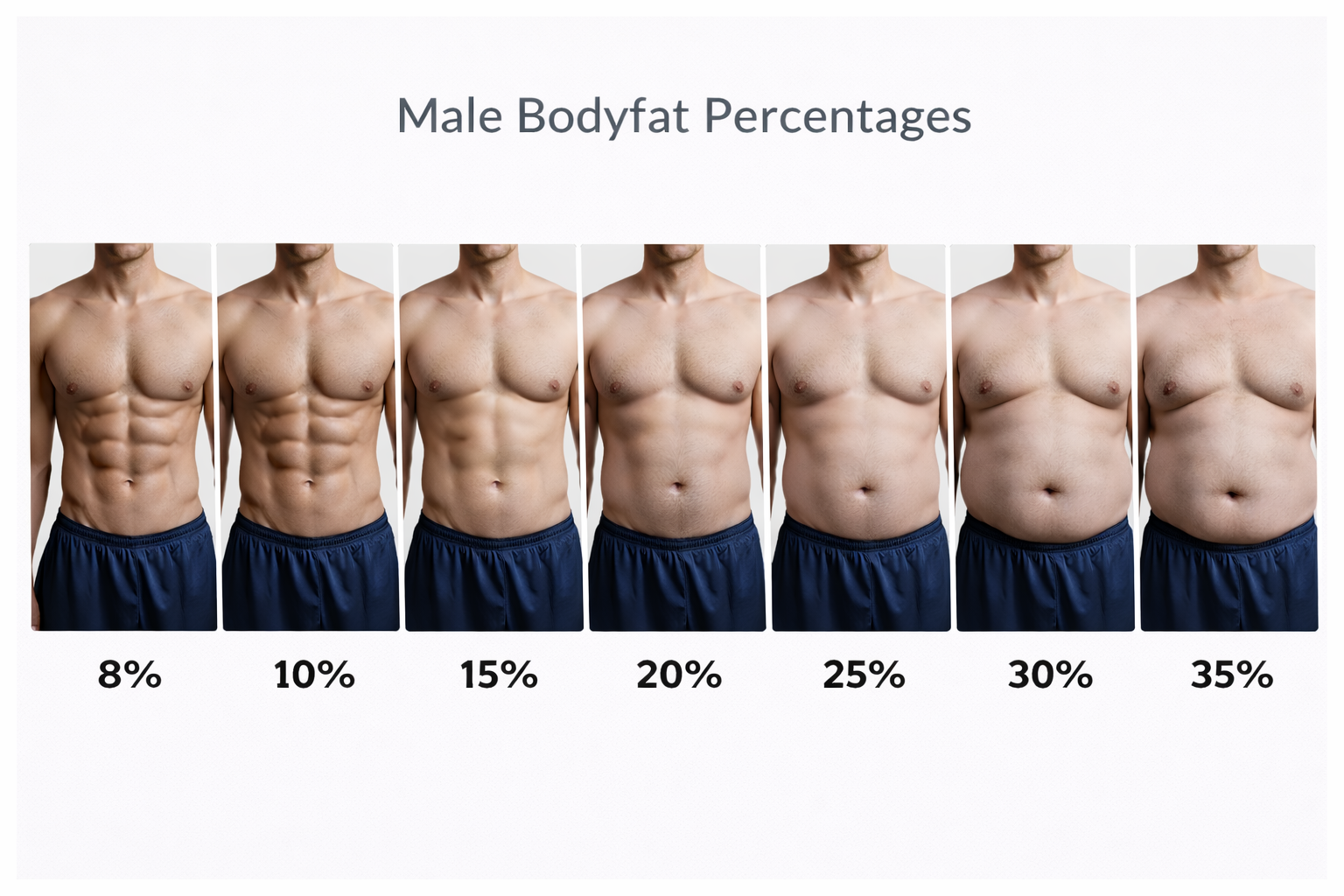
If you are very lean (under 10% body fat for men, under 18% for women) but have a medical diagnosis where you want to optimize healing through fasting, you need a different protocol. You might need to strategically gain some body fat first, then carefully manage the fast to prevent muscle loss. This is drastically more complex and is out of scope for this site.
Bottom line: If you are already lean and want to fast for healing or spiritual reasons, work with a professional who understands body composition and metabolic health. The protocols in this guide are designed for people with body fat to lose.
If you are under 18, actively growing, or have a history of eating disorders, do not fast without professional guidance. The risks outweigh the benefits for these groups.
Common Mistakes
Avoid these rookie errors:
1. Not Using Electrolytes
The biggest mistake. Most people feel terrible during fasts because they are dehydrated and electrolyte-depleted, not because they lack food. Use electrolytes from day 1 of any fast over 24 hours.
2. Breaking the Fast With Junk Food
After 48 hours of fasting, your first meal should not be pizza, donuts, or fast food. This spikes insulin dramatically, causes digestive distress, and wastes the metabolic benefits you just earned. Break fasts with nutrient-dense, whole foods.
3. Doing Too Much Too Soon
If you have never fasted before, do not jump straight into a 5-day water fast. Start with 16/8, then 18/6, then OMAD, then 48 hours. Build gradually.
4. Fasting Too Frequently Without Feast Periods
Back-to-back extended fasts without adequate refeeding periods trigger metabolic adaptation. Your body down-regulates metabolism and resists fat loss. Cycle feast and famine strategically.
5. Ignoring Warning Signs
If you feel extremely weak, dizzy, have chest pain, irregular heartbeat, or confusion, stop fasting and eat. These are warning signs that something is wrong. Fasting should be empowering, not dangerous.
6. Not Preparing Mentally
Fasting is as much mental as physical. Hunger comes in waves and passes. Boredom and habit are bigger challenges than actual hunger. Have a plan for what you will do when you normally eat (go for a walk, read, work on a project). Stay busy.
Biblical Perspective
Fasting is deeply rooted in Scripture. It is a spiritual discipline practiced by the most faithful figures in the Bible.
“So He said to them, ‘This kind can come out by nothing but prayer and fasting.’” - Mark 9:29 (NKJV)
Jesus connected fasting with spiritual power. It sharpens focus on God and increases dependence on Him rather than on physical comfort.
“Then Jesus was led up by the Spirit into the wilderness to be tempted by the devil. And when He had fasted forty days and forty nights, afterward He was hungry.” - Matthew 4:1-2 (NKJV)
Jesus fasted for 40 days before beginning His ministry. This was preparation for spiritual battle and mission.
“Then Moses went up into the mountain, and a cloud covered the mountain. Now the glory of the Lord rested on Mount Sinai, and the cloud covered it six days. And on the seventh day He called to Moses out of the midst of the cloud. The sight of the glory of the Lord was like a consuming fire on the top of the mountain in the eyes of the children of Israel. So Moses went into the midst of the cloud and went up into the mountain. And Moses was on the mountain forty days and forty nights.” - Exodus 24:15-18 (NKJV)
Moses fasted for 40 days while receiving the Law from God.
“So I gave my attention to the Lord God to seek Him by prayer and supplications, with fasting, sackcloth, and ashes.” - Daniel 9:3 (NKJV)
Daniel fasted regularly as an act of devotion and humility before God.
The Daniel Fast is a partial fast based on two passages from the book of Daniel:
Daniel 1:8-16 (NKJV) - “But Daniel purposed in his heart that he would not defile himself with the portion of the king’s delicacies, nor with the wine which he drank… ‘Please test your servants for ten days, and let them give us vegetables to eat and water to drink.’” Read the full passage at Daniel 1:8-16 (NKJV).
Daniel 10:2-3 (NKJV) - “In those days I, Daniel, was mourning three full weeks. I ate no pleasant food, no meat or wine came into my mouth, nor did I anoint myself at all, till three whole weeks were fulfilled.” Read at Daniel 10:2-3 (NKJV).
What you eat: Only plant-based whole foods (vegetables, fruits, whole grains, legumes, nuts, seeds). Drink only water.
What you avoid: Meat, dairy, eggs, sweeteners, leavened bread, caffeine, alcohol, processed foods.
How long: Typically 21 days (based on Daniel 10:2-3).
Why it is popular: The Daniel Fast has been popularized in modern Christian circles as a spiritually-focused fast, often done at the beginning of the year or before major decisions. It is less extreme than water fasting but still requires discipline and intentionality. The focus is not just dietary restriction but dedicating time to prayer, Scripture, and seeking God.
This is a partial fast, not a complete fast. You are still eating, just restricting what you eat to simple, whole foods.
Why Fasting Has Spiritual Power
- It builds self-control and discipline - You deny physical appetite to focus on something greater.
- It creates humility - You recognize your dependence on God, not just food.
- It sharpens focus on prayer - Without the distraction of meals, you have more time and mental clarity for prayer and Scripture.
- It demonstrates seriousness - Fasting shows God (and yourself) that you are willing to sacrifice comfort for spiritual growth.
Fasting is not earning God’s favor. It is positioning yourself to hear Him more clearly, to depend on Him more fully, and to grow in discipline and faith.
Resources
Books
- The Obesity Code by Dr. Jason Fung - Explains insulin, metabolic syndrome, and why fasting works for weight loss. Essential reading for understanding the metabolic science behind fasting.
- The Complete Guide to Fasting by Dr. Jason Fung - Practical guide to different fasting protocols and how to implement them safely. Co-authored with Jimmy Moore.
- Fast Like a Girl by Dr. Mindy Pelz - Focuses on hormonal health and fasting for women, but principles apply broadly.
- Life in the Fasting Lane by Dr. Jason Fung, Eve Mayer, and Megan Ramos - Real-world stories and practical advice on making fasting a sustainable lifestyle.
YouTube Channels
- Dr. Jason Fung - Leading voice on fasting, insulin resistance, and metabolic health. Clear, evidence-based explanations.
- Dr. Mindy Pelz - Fasting, autophagy, hormonal health, and practical implementation strategies.
- Thomas DeLauer - Practical fasting tips, keto, and metabolic science with detailed breakdowns.
- What I’ve Learned - Science-backed deep dives into nutrition, fasting, and health topics.
Educational Resources
- Wikipedia - Refeeding Syndrome - Medical overview of refeeding syndrome risks and management.
- Healthline - Intermittent Fasting Guide - Comprehensive overview of fasting protocols and benefits.
Online Communities
- r/fasting on Reddit - Active community sharing experiences, tips, and support.
- r/intermittentfasting on Reddit - Focused on daily IF protocols.
Summary
Fasting is one of the most powerful tools you have for healing, metabolic health, and body recomposition. It is not starvation. It is intentional, controlled, and strategic.
Core principles:
- Humans are optimized for feast and famine - We have mastered feast. Bring back famine in a controlled way.
- Fasting triggers autophagy - Cellular cleanup that does not happen when constantly eating.
- Hormetic stress, not chronic stress - Short-term fasting is beneficial. Back-to-back extended fasts without feast periods trigger metabolic adaptation.
- Electrolytes are essential - Most people feel terrible during fasts because of electrolyte imbalance, not lack of food. Use Keto Vitals and RealSalt.
- Nutrient-dense refeeds replenish one-time consumables - Your body recycles some nutrients but runs out of others (lysine, leucine, ALA, vitamin C, B-vitamins, zinc, copper). Refeed strategically.
Recommended protocols:
- Daily practice: 18/6 or OMAD for sustainable metabolic benefits.
- Periodic extended fasts: 2-3 day fast monthly or quarterly for hormetic stress boost.
- Serious healing or weight loss: Rolling 48s for 2-3 weeks. This is the optimal protocol - sustainable, effective, and safe.
- Strongly discourage 7+ day fasts: Diminishing returns on autophagy, micronutrient depletion, refeeding syndrome risk, and harder with no better results than Rolling 48s.
Set yourself up for success:
- Do not dive into fasting cold turkey as a sugar-burner.
- Transition: sugar-burning → ketosis → OMAD → extended fasts.
- Avoid keto flu and electrolyte crashes by preparing your metabolism.
Cycle feast and famine:
- After 2-3 weeks of Rolling 48s, take 1-2 weeks of normal eating.
- Your body adapts hormonally to patterns. Do not fast forever.
- Strategic feast periods prevent metabolic adaptation and cortisol spikes.
Fasting is not for everyone:
- Under 18, eating disorder history, pregnant/breastfeeding, underweight, type 1 diabetes, certain medications: do not fast without professional guidance.
Fasting and faith:
- Fasting is a biblical discipline practiced by Jesus, Moses, and Daniel.
- Builds self-control, humility, spiritual focus, and dependence on God.
Fasting should feel empowering, not torturous. Done correctly, it is one of the most effective tools for transforming your health and deepening your spiritual life.