Grit
Categories:
8 minute read
Grit is one of those traits everyone respects, but very few train on purpose. Most people say they want results. Fewer people stay consistent when the work gets boring, slow, or painful.
This page is about building that consistency. We are not talking about fake hustle quotes. We are talking about the kind of perseverance that helps you become a strong man over years, not a motivated man for one weekend.
What Grit Is, And What It Is Not
Much of this content is inspired by a book by psychologist Angela Duckworth called “Grit: The Power of Passion and Perseverance.” Duckworth’s research popularized grit as a key predictor of success in various domains, from education to business to sports.
Angela Duckworth defines grit as passion and perseverance for long-term goals. That is still one of the most useful practical definitions.
- Duckworth book page: Grit book
- Duckworth FAQ definition: What is grit?
Grit is not the same as being intense for two days. Grit is staying committed when progress is slow and nobody claps.
Grit is choosing the same meaningful direction over and over, even when it is hard, boring, or inconvenient.
Why Young Men Need This Right Now
A lot of young guys are not lazy. They are overstimulated, distracted, and undertrained in perseverance. Phones give instant reward. Real life gives delayed reward.
That gap is where grit matters.
If you cannot tolerate boredom, you cannot build mastery. If you quit every time motivation drops, you will keep restarting your life.
What The Research Actually Says
Duckworth’s original research found that grit predicted outcomes like persistence and completion in difficult settings.
- Original 2007 paper (DOI): Grit: Perseverance and passion for long-term goals
- Duckworth research page: Research and measures
- TED talk overview: Grit: The power of passion and perseverance
Research also shows grit overlaps with traits like conscientiousness and self-control, but is not exactly the same construct.
- Self-control and grit review: Current Directions paper
Grit is not a magic trait and not the only thing that matters. Opportunity, environment, mentorship, family stability, and resources also matter. Even Duckworth says grit and structural barriers are both real and intertwined.
The Four Parts Of Grit
In Duckworth’s framework, gritty people usually build four assets: interest, practice, purpose, and hope. This is helpful because it gives you things to train.
Interest
You need at least one domain you genuinely care about. You cannot white-knuckle a meaningless mission forever.
Practice
You need deliberate reps, not random effort. Hard things done consistently beat occasional heroic effort.
Purpose
Your work should connect to something bigger than ego. Purpose helps you keep going when results are delayed.
Hope
This is not wishful thinking. It is the belief that effort can change your future.
Grit Versus Motivation
Motivation is a feeling. Grit is a decision system.
Motivation goes up and down. Grit keeps you moving anyway.
Do not ask, “Do I feel like it?” Ask, “Did I decide this matters?” If yes, do the rep.
Practical Ways To Build Grit
You build grit with small, repeatable stress doses. Not chaos. Not self-destruction. Controlled challenge.
Start With A 30-Day Grit Block
Pick one goal and stay with it for 30 days. Do not optimize constantly. Do not keep changing plans.
- Goal: One meaningful target, clearly defined.
- Daily Minimum: A minimum rep so you never hit zero.
- Time Block: Same time each day when possible.
- Scorecard: Track completion, not perfection.
- Goal: Improve fitness baseline.
- Daily Minimum: 20 minutes of training or a 30-minute walk.
- Time Block: 6:30 AM before phone use.
- Scorecard: Mark
doneornot doneeach day.
Use The “No Zero Days” Rule
Zero days train quitting. Even a tiny rep protects identity.
- On a great day: Do full session.
- On a bad day: Do the minimum rep.
- On a terrible day: Do a 5-minute version.
Your absolute worst day at the gym is still way better than your best day on the couch. Do the rep!
Build Friction Against Quitting
Set yourself up for success. Make quitting harder and execution easier.
- Environment: Lay out clothes, tools, and checklist the night before.
- Accountability: Send proof to one trusted friend.
- Pre-commitment: Put the work block in calendar like an appointment.
- Trigger Rule: “After I brush my teeth, I start my first work rep.”
Practice Boredom On Purpose
Boredom tolerance is a superpower.
- 20 minutes of single-task deep work, no phone.
- One workout per week with no music, no distractions.
- One daily walk without podcasts.
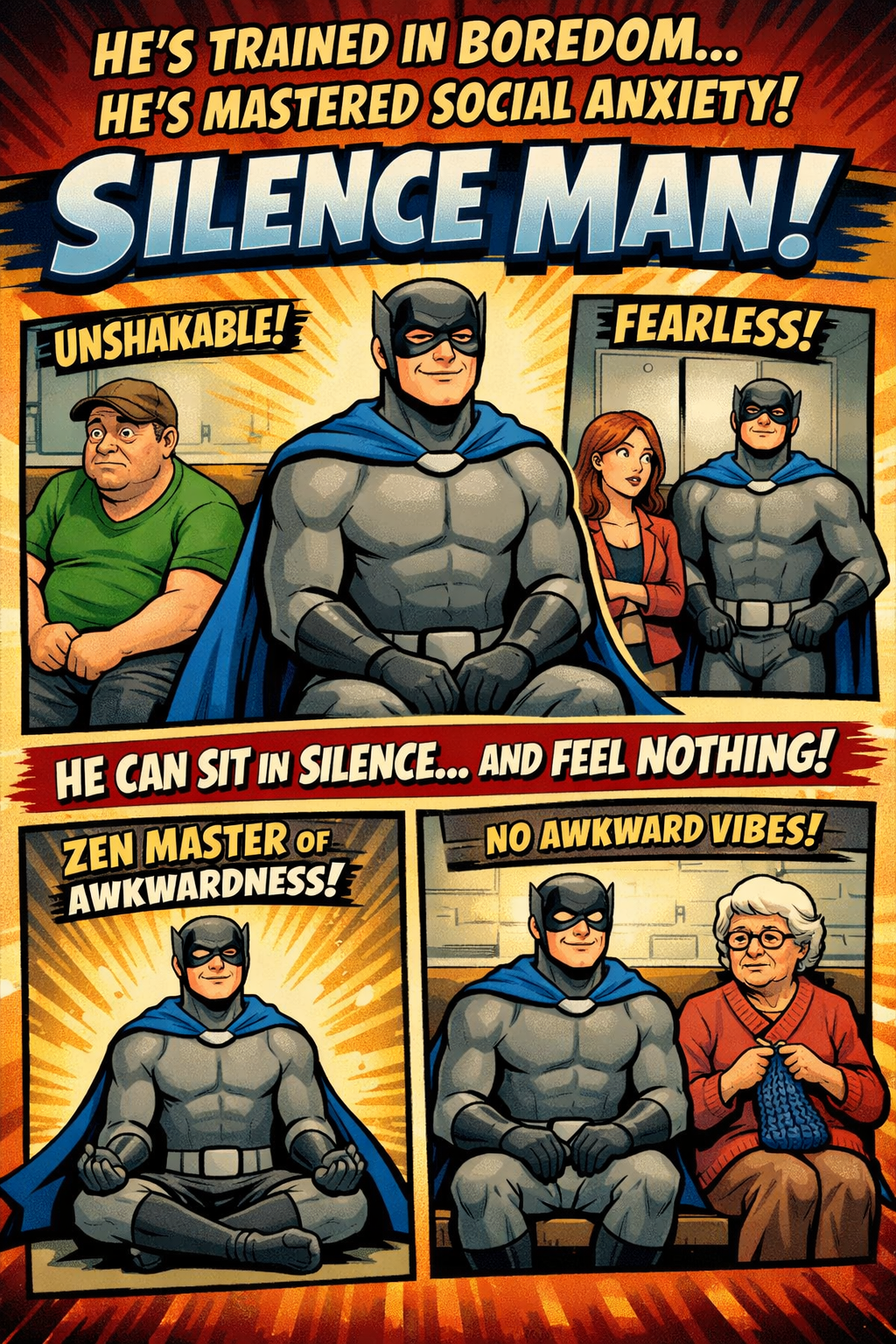
- 20 minutes in silence, no phone, no music.
These reps train your brain to stop needing constant stimulation to function. If you can master boredom and silence, it’s literally a super power!
×Silence Man - mastering the superpower of comfortable silence
How To Challenge Yourself Without Being Stupid
Some guys hear “grit” and think it means reckless suffering. It does not.
Use the 80/20 challenge rule:
- 80% of the time, do sustainable reps.
- 20% of the time, push the edge and test yourself.
Grit does not mean ignoring injuries, burnout, or obvious warning signs. Smart consistency beats dramatic self-destruction.
Use A Challenge Ladder
A challenge ladder gives you progressive difficulty. You earn the next level by being consistent at the current one.
- Level 1 (Stability): Hit your daily minimum for 7 straight days.
- Level 2 (Pressure): Keep the minimum while adding one harder rep this week.
- Level 3 (Discomfort): Do one rep in conditions you dislike, like early mornings or no music.
- Level 4 (Public Accountability): Share your weekly goal and report results to someone.
- Level 5 (Leadership): Help one friend stay consistent on his own goal.
This structure builds confidence without needing fake hype. It also keeps challenge high enough to grow, but not so high that you quit.
- Day 1-7 Rule: Same wake time each day.
- Daily Minimum: 20 minutes on one goal that matters.
- No-Zero Rule: If life blows up, do a 5-minute version.
- Night Review: Mark
doneornot donebefore bed.
Biblical Foundation For Perseverance
If you want biblical support for grit, Scripture is full of it. Not in modern self-help language, but in clear calls to endurance, discipline, and long obedience.
“And let us not grow weary while doing good, for in due season we shall reap if we do not lose heart.” - Galatians 6:9 (NKJV)
“My brethren, count it all joy when you fall into various trials, knowing that the testing of your faith produces patience.” - James 1:2-3 (NKJV)
“Therefore strengthen the hands which hang down, and the feeble knees.” - Hebrews 12:12 (NKJV)
“I have fought the good fight, I have finished the race, I have kept the faith.” - 2 Timothy 4:7 (NKJV)
Biblical grit is not ego-driven grinding. It is faithful endurance in the right direction.
Common Grit Killers
Most people do not fail from one big mistake. They fail from repeated pattern breaks.
- Novelty Addiction: Constantly changing goals before results compound.
- Emotion-Led Decisions: Only working when mood is high.
- Comparison Spiral: Quitting because someone else is ahead.
- All-Or-Nothing Thinking: Missing one day and calling the whole plan ruined.
- No Purpose Link: Grinding hard with no meaning behind it.
Grit Scorecard You Can Start Today
Track this for 4 weeks. Keep it simple.
- Daily planned rep completed: yes or no
- Number of “minimum only” days
- Number of zero days
- Weekly challenge rep completed: yes or no
- Weekly reflection written: yes or no
- Where did I quit early this week?
- Where did I stay with discomfort?
- What one adjustment will make next week more consistent?
When To Pivot, Not Quit
Grit does not mean stubbornly doing the wrong thing forever. You may need to change tactics while staying loyal to the mission.
Quit the method when needed. Do not quit the meaningful goal too quickly.
A simple filter:
- Keep going if the goal is meaningful and progress is slow but real.
- Adjust method if effort is high but results are flat for months.
- Reconsider goal if it clearly violates your values or calling.
Final Perspective
Talent helps, but talent without perseverance usually wastes potential. Grit is how ordinary people build uncommon outcomes over time.
You do not need to feel inspired every day. You need a mission, a daily rep, and the humility to repeat basic work for a long time.
If this feels simple, good. Simple done daily is exactly the point.
Summary
Grit is long-term passion plus perseverance. It is not hype, and it is not one intense week. It is consistent reps in a meaningful direction.
To build grit, pick one 30-day goal, define a daily minimum, eliminate zero days, and track completion. Use controlled challenge, not reckless suffering.
Duckworth’s work is a strong starting point, but grit is not the only factor in success. Environment and opportunity matter too.
Scripture supports endurance, discipline, and finishing what matters. Build your life that way: faithful reps, week after week.